How Do You Choose Safe Treats for Puppies Without Overdoing It?
The safest puppy treats are the ones that fit a small mouth, are easy to chew and digest, and stay within a puppy’s daily calorie budget. The real trick is treating rewards like part of the diet, not a free extra.
On this page
Puppy treats are one of those small joys that can quietly become a big habit. The safest way to use them is to think about two questions at once: Can my puppy actually chew and digest this comfortably? and How much of the day’s food is this treat really taking up? Treats should not exceed 10% of a puppy’s overall daily calories, and they work best when they’re treated as part of training rather than as constant little extras. [PetMD][BARK Post]
The practical goal isn’t to avoid treats. It’s to make them useful. A good puppy treat should be small enough for a puppy’s mouth, soft enough to chew, easy to digest, and sized for the puppy’s age and weight. That matters because puppies have smaller mouths, more fragile teeth, and more delicate digestive systems than adult dogs. A treat that’s too hard or too large can create problems that range from stomach upset to choking hazards. [PetMD]
What makes a treat safe for a puppy?
A safe puppy treat starts with fit. The best options are appropriate in size and texture for the puppy’s mouth, palatable, nutritionally sensible, from a trusted brand, and made for the purpose you’re using them for. In everyday terms, that usually means a soft, small reward that disappears quickly instead of a chewy snack that turns training into a meal. [PetMD]
That size-and-texture question matters more than many owners expect. A crunchy treat isn’t automatically better, and a treat marketed for dogs in general isn’t automatically right for a puppy. Puppies do better with treats that are easy to chew and break down cleanly, especially when they’re still learning how to take food gently. [PetMD]
Label-checking helps here too. Treat packaging should tell you whether the product is appropriate and safe for your puppy’s age and weight. That simple step filters out a lot of guesswork, especially when packages are designed to look appealing to people first and practical for puppies second. [PetMD]
How much treat is too much?
The clearest rule is the calorie rule: treats should stay under 10% of a puppy’s daily calories. That guideline matters because it keeps treats in their proper place — a reward, not a second diet. It also helps prevent a common mistake: assuming a puppy can “burn off” a generous handful of treats because they’re energetic and growing. Growth doesn’t make extra calories disappear. [PetMD][BARK Post]
One helpful way to think about it is that treat frequency matters less than treat total. A few tiny rewards spaced through training may be fine; a stream of casual nibbles throughout the day can quietly push calories much higher than expected. That’s why training treats work so well as a strategy: they give you a reason to use food intentionally instead of reflexively. [BARK Post]
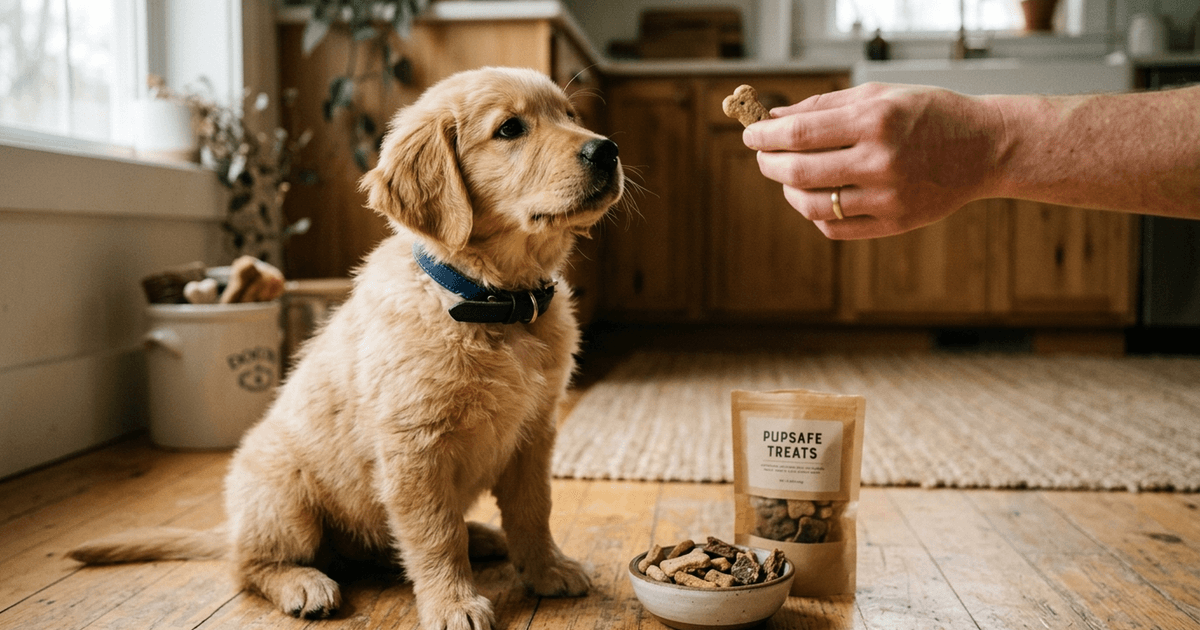
Small, pea-sized training treats — or breaking larger treats into tiny pieces — make that easier. You still get the reward value, but you use far fewer calories per repetition. For a puppy learning sit, come, and leash manners, that can make the difference between a useful training session and a very snack-heavy afternoon. [BARK Post]
Ingredients and label warnings worth noticing
Ingredient lists are worth a close look, but they shouldn’t distract from size and calorie control. One ingredient that stands out clearly is xylitol: it is severely toxic to dogs, and even small amounts can cause life-threatening low blood sugar and liver failure. If a product contains xylitol, it should not be given to a dog at all. [Advance Pet Mart][ASPCA][AKC]
Some sources also flag artificial colors, added sugars, corn syrup, and excessive salt as ingredients to avoid. Those warnings are useful as a general screen, but they don’t replace the more basic questions: is this treat puppy-appropriate, is it easy to chew, and can it fit into the 10% calorie limit? [Advance Pet Mart][PetMD]
A sensible label habit is to slow down and read the back of the package, not just the front. “For dogs” is not the same as “good for puppies,” and “healthy” on the front doesn’t tell you whether the treat is too large, too hard, or too calorie-dense for repeated use. [PetMD]
How to use treats without overdoing it
Training is where treats earn their keep. A puppy doesn’t need a reward every time you feel like giving one; it needs rewards that clearly connect to a behavior you want to reinforce. That’s why treats are best used mainly as a training tool rather than given repeatedly just because the puppy is adorable. [BARK Post]
A simple rhythm helps:
- Choose a small, soft treat that your puppy can chew quickly. [PetMD]
- Break larger treats into tiny pieces when you can. [BARK Post]
- Count treats as part of the day’s calories, not as an extra. [PetMD][BARK Post]
- Check the label for age and weight suitability before you buy. [PetMD]
- Avoid xylitol entirely, and scan carefully for other ingredients you’d rather not rely on. [ASPCA][Advance Pet Mart]
That approach keeps treats useful instead of casual. It also makes training cleaner: the puppy gets a fast, clear reward, and you don’t end up handing out food so often that the reward loses meaning.
If you’re choosing between two treats, the better one is usually the one that is smaller, softer, easier to digest, and easier to portion. For many puppies, that’s more valuable than a fancier ingredient list or a louder promise on the package. You can always build a treat habit that feels generous without being excessive.
The quiet trick is restraint. Pick treats that suit the puppy in front of you, not the marketing on the bag, and keep the total amount low enough that the rewards still feel special. That’s the balance that protects both training progress and the puppy’s stomach.
Related reading
FAQ
Sources
- 9 Best Puppy Treats of 2026, Recommended by Vets | PetMD
- ASPCA — Updated Safety Warning on Xylitol: How to Protect Your Pets
- American Kennel Club — What is Xylitol? Dangers of Dogs Eating Xylitol/Birch Sugar
- Are Treats Good for Dogs? How to Find Healthy Dog Treats - PetMD
- Reddit — Dog Treat Ingredients to Avoid, What Every Pet Owner ... — owner discussion