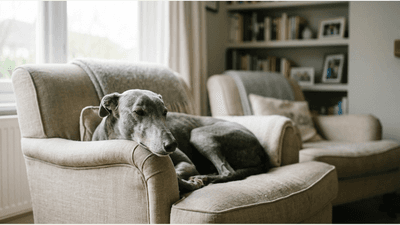
How Do You Tell Whether Your Apartment Is a Good Match for a Dog Breed Before You Adopt?
A good apartment match is less about square footage than about energy, noise, trainability, and how a dog handles close living with people. The smartest pre-adoption check is to test the breed against your building, your routine, and your tolerance for barking, shedding, and extra exercise.
On this page
The fastest way to judge whether an apartment and a dog breed belong together is to stop thinking about size first. Square footage matters less than how much energy the dog has, how much it barks, how well it handles close quarters, and how much daily activity it needs to stay content.
That’s the part many people miss. A roomy apartment can still be a poor match for a dog that needs a lot of exercise and mental stimulation, because limited outlets often leave that dog restless. A smaller apartment can suit a calm, adaptable dog surprisingly well, especially if the dog is happy to lounge, go on regular walks, and settle into a predictable routine.
Apartment fit is a lifestyle question, not a measurement question.
What actually makes a dog apartment-friendly
A breed’s size tells you only a little. The more useful questions are about temperament, energy level, barking tendencies, trainability, adaptability, shedding, and exercise needs. Those are the traits that shape everyday life in a building where walls are thin and neighbors are close.
Think about what your building asks of a dog. Does the dog need to pass people politely in a lobby, stay calm in an elevator, ignore hallway noise, and avoid turning every footstep outside the door into a full conversation? In shared housing, those details matter because a dog that is noisy or unsettled doesn’t just affect your own routine; it affects the people living around you too.
AKC guidance specifically says to consider neighbors when choosing an apartment dog, especially for barking and polite behavior in elevators, stairs, and lobbies. That’s a useful standard because it shifts the question from “Can a dog live here?” to “Can this dog live here well?”
Why size is an unreliable shortcut
It’s easy to assume small dogs are automatically the best apartment dogs and large dogs are always bad fits. Real life doesn’t work that neatly.
Many large-breed dogs have lower activity levels and are perfectly content to spend a lot of time resting. By contrast, some small breeds are energetic, vocal, and hard to satisfy in a limited space. A tiny dog that wants constant action can be more difficult in an apartment than a bigger dog that likes a slow day and a steady walk.
The practical reason this matters is simple: a dog that doesn’t get enough exercise or stimulation often gets creative. Restlessness can show up as chewing, pacing, whining, or other destructive behavior. So the issue isn’t whether the dog fits on the sofa. It’s whether the dog’s needs fit your home and your schedule.
Some small dogs can do well with indoor playtime or a brisk walk, which is a reminder that breed size is only one piece of the puzzle. The better test is whether the dog’s normal rhythm matches yours.
A pre-adoption apartment fit check
Before adopting, walk through the breed’s day in your own mind, not in a brochure.
- Energy: Can you realistically meet this dog’s exercise needs most days?
- Noise: Is the breed known to bark or howl enough to bother neighbors?
- Temperament: Does the dog tend to stay calm in busy, close-contact settings?
- Trainability: Can you teach polite hallway, elevator, and guest behavior?
- Adaptability: How well does the breed handle routine changes and shared spaces?
- Shedding: Will coat upkeep be manageable in a smaller home?
A dog with heavy shedding can make apartment cleaning harder and may be a problem for people with allergies. That’s not just a housekeeping issue; in a compact home, fur builds up faster, and so does frustration if the coat care isn’t part of the plan.
A dog with high exercise needs may also need more than a quick trip around the block. If your life is already packed, that mismatch can become the reason a sweet dog starts bouncing off the walls.
Red flags in shared buildings
Some apartment problems are less about the floor plan and more about the building itself.
A dog that struggles with hallway traffic, elevator rides, or close encounters with strangers may find apartment life stressful. Likewise, barking or howling can disturb nearby units quickly, especially when sounds carry through shared walls or hallways.
Look at the building from your dog’s point of view:
- Is the lobby busy most hours of the day?
- Are there long elevator waits or narrow stairwells?
- Do neighbors regularly pass close to your door?
- Is there a lot of noise from hallways, trash chutes, or street traffic?
The more a dog has to cope with strangers, sounds, and tight spaces, the more important calm temperament and training become. A dog that feels settled in those settings is much easier to live with than one that treats every passing footstep like an emergency.
Breeds that can surprise people
One of the most useful apartment myths to let go of is the idea that a large dog always needs a house and a yard. Some large dogs are laid-back enough to do well in apartments because they’re simply not high-octane dogs.
That doesn’t mean every large breed is apartment-friendly, and it doesn’t mean any breed can be squeezed into any space. It does mean that personality and energy level are better guides than size alone. A mellow dog that’s happy with regular walks and indoor downtime may be a better fit than a smaller dog that’s intense, noisy, or constantly on the move.
Questions worth asking a shelter or breeder
Before you commit, ask for details that go beyond breed name and adult weight.
- How much daily exercise does this dog typically need?
- How does the breed usually handle barking in a busy building?
- Is the dog comfortable with elevators, stairs, and strangers in close quarters?
- How much grooming or shedding should you expect?
- How does the dog behave when left alone in a small space?
- What kind of home has worked best for dogs like this before?
Those questions matter because they tell you how life is likely to feel after adoption. A dog that looks right on paper can be exhausting in practice if its temperament and energy don’t match the way you actually live.
A thoughtful apartment match is less about “small enough” and more about “settled enough, trainable enough, and predictable enough.” When those pieces line up, apartment life can feel calm instead of cramped.
If you're still comparing options, a breed guide can help you sort through the broader picture at /dog-breeds.