Why Do Cats Snore, Twitch, or Drool in Their Sleep?
A sleeping cat that twitches, makes small noises, or drools a little is often just doing normal cat sleep. The important part is knowing which changes belong to dream sleep and which ones deserve a vet call.
On this page
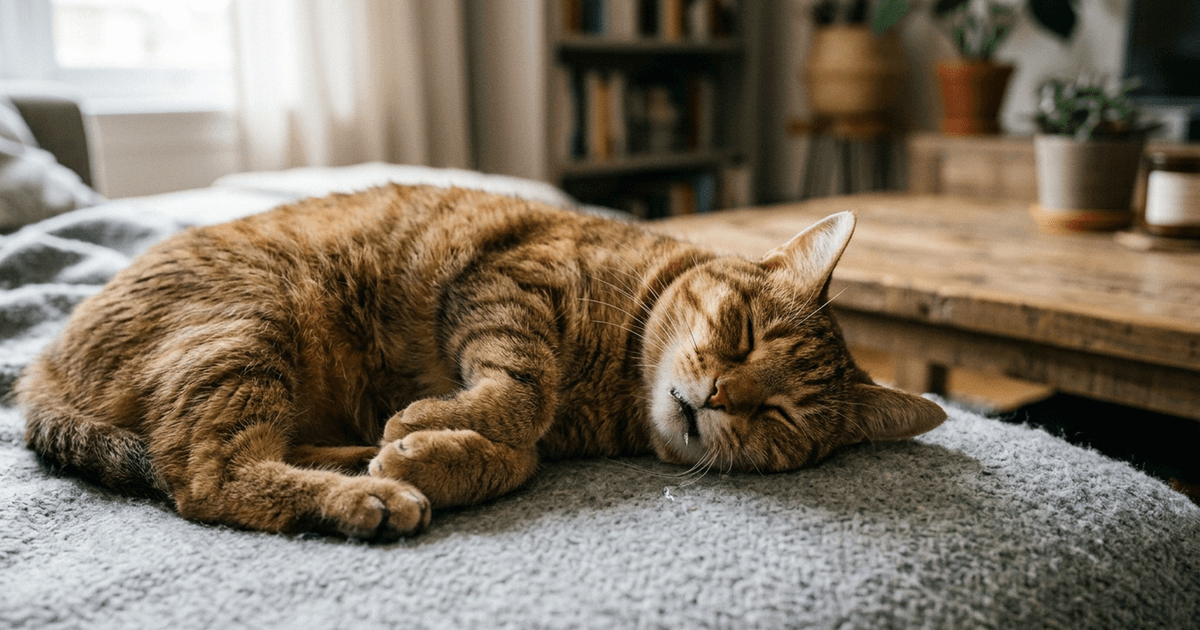
A cat that snores, twitches, chirps, or even drools a little in sleep is often doing something completely ordinary. Cats are long sleepers, they cycle through light sleep and REM sleep, and that’s exactly when you may notice little movements or odd sounds.[A][B][C]
The trick is not to treat every sleep noise as if it means the same thing. A soft snore on a relaxed cat can be harmless, but new noisy breathing, twitching that doesn’t stop when the cat wakes, or drooling with other symptoms is a different story.[B][D][E]
Cats don’t sleep in one neat block the way people imagine. They’re polyphasic sleepers, which means they nap in many short stretches, and they may sleep around 12 to 18 hours a day depending on age and activity level.[A][C] During those lighter stages and during REM sleep, their bodies can stay busy even while their eyes are closed. That’s when a paw may jerk, whiskers may quiver, or a cat may let out a tiny chirp or meow.[A][C]
That’s also why a sleeping cat can sound surprisingly expressive. Sources describing normal sleep behavior mention purring, meowing, chirping, hissing, growling, snoring, and raspy or noisy breathing while asleep.[A][C] Purring in sleep is often framed as a sign of relaxation, and small movements during REM sleep are commonly described as part of dreaming.[A][C]
Why cats snore
Snoring is usually the easiest of the three sounds to notice, because it’s the most audible. In cats, a low-pitched snoring or congested sound is often tied to the upper airway, especially the nose or back of the throat, and it can be more noticeable in certain positions.[B] A cat curled up tightly, or one sleeping with its chin lifted, may sound different from the same cat stretched out on the couch. That doesn’t automatically mean trouble; it just means posture can change how breathing sounds travel.[B]
What matters is whether the sound is occasional and mild, or whether it’s becoming persistent, louder, or paired with other signs. New or worsening noisy breathing deserves attention, especially if it comes with panting, gagging, difficulty eating, exercise intolerance, or visible trouble breathing.[B]
Why cats twitch in sleep
Sleep twitching is usually the least worrying of the three. Gentle twitching, small movements, stretching, and brief noises during sleep are commonly described as normal, especially during REM sleep.[A][C][D] The key detail is that the movement stops when the cat wakes and the cat otherwise seems healthy.[D]
That said, not every movement should be brushed off. Twitching that happens while the cat is awake, does not stop when waking, or appears alongside collapse, seizures, excess drooling, difficulty walking, or obvious sensitivity in the tail or body should prompt veterinary evaluation.[D] In plain terms: a sleepy paw flick is one thing; sustained uncontrolled movement is another.
Why cats drool in sleep
Occasional drooling during sleep can happen simply because a cat is deeply relaxed.[E][F] Several sources describe sleeping drool as potentially harmless when it’s occasional and not paired with other illness signs.[E][F] In a cat that otherwise eats normally, acts normally, and has no bad breath or mouth pain, a small wet patch on the blanket may not mean much.
Drooling becomes more interesting when it’s not isolated. Drooling with poor appetite, behavior changes, bad breath, or other signs of illness is a reason to call the vet.[E] The same goes for drooling that’s new, excessive, or accompanied by discomfort.[F] Saliva can tell a useful story, but it shouldn’t be judged on its own.
A practical symptom checklist
A good way to sort normal from not-normal is to look at the whole picture instead of the sound alone.
Usually normal:
- Mild twitching that stops once the cat wakes.[D]
- Soft snoring that comes and goes during sleep.[B][C]
- Tiny chirps, meows, purrs, or other brief sleep sounds.[A][C]
- Occasional drool in an otherwise relaxed, healthy cat.[E][F]
Call a vet if you notice:
- Twitching while awake or twitching that continues after waking.[D]
- Snoring or noisy breathing that is new, getting louder, or paired with panting, gagging, eating trouble, or breathing difficulty.[B]
- Drooling with poor appetite, bad breath, behavior changes, or other signs of illness.[E]
- Any breathing pattern that seems labored, especially if your cat looks distressed.[B]
Think of it this way: normal sleep behavior is brief, soft, and self-limiting. The warning signs are the ones that persist, intensify, or show up alongside other changes.
What owners are noticing in real life
A lot of cat owners notice the same things at home: a snore that seems louder in one position, a chirp during sleep, or breathing that sounds different when the cat is curled tightly.[G][H][I] Those conversations are useful mainly because they show how common these questions are. They are owner observations, not medical proof, but they do reflect the real-world moment when a sound suddenly seems new or alarming.
That’s usually the turning point. A sound that has always been there is easier to ignore; a new sound, or a familiar sound that changes, is what makes people pause. That instinct is worth respecting.
If you can, take a short video when the sound happens. It helps you compare what you’re hearing against what the cat is doing physically, and it gives your vet something concrete to evaluate if the pattern keeps happening.
A sleeping cat that twitches, snores softly, or drools a little is often just being a cat at rest. The difference between normal and concerning isn’t the existence of the sound itself — it’s the pattern around it, and whether your cat still looks comfortable, awake, and otherwise well.
For more everyday pet care reading, see our blog.